Ability to complete Certificate IV Electrical Railway Signalling as training spots become available.
Ability to demonstrate a commitment to workplace safety. Good communication skills and a proactive attitude.
Must have a Queensland electrical fitter mechanics licence and a drivers licence. Railway Signalling qualifications are desirable but not essential as training is provided.
Experience with installation and fault rectification of electrical equipment particularly in an industrial setting is desirable.
Benefits
Long-term career and stability with plenty of opportunities to progress and digress in a world class rail service provider. We are a safety focussed equal opportunity employer celebrating equity, diversity and inclusion.
Pay scale ET2.1 – ET3.2, Base salary from $85,000 - $105,000. Actual earning range with penalties, allowances and overtime is approx. $120,000 - $180,000.
Permanent full-time position
All uniforms and PPE provided. Tool allowance provided to maintain your basic hand tolls plus all other tools and equipment are supplied.
Access to our Fitness Passport scheme and our Employee Assistance Program providing employees with holistic and contemporary health and wellbeing programs.
Training + Development
Information not given or found
Interview process
submit application via the queensland rail website
shortlisted candidates may complete a psychometric assessment
health assessment may be required
background checks will be conducted
Visa Sponsorship
Information not given or found
Security clearance
criminal history check
credit check
Company
Overview
Over 150 years
Years of Operation
The company has been shaping Queensland's transportation network for over a century and a half.
1,600 kilometers
Rail Network Span
The expansive rail network connects urban and regional areas across Queensland.
Millions annually
Passengers Served
Queensland Rail reliably serves millions of passengers each year with safe and efficient travel options.
1865
Year of Origin
The company's history began in 1865 as a regional rail operator.
It delivers a range of services, including passenger rail transport, freight logistics, and rail infrastructure management.
Known for its reliability, serves millions of passengers annually, providing safe, efficient travel options.
It plays a key role in moving freight, particularly coal and agricultural products.
Key infrastructure projects include upgrading rail lines, stations, and signaling systems to support modernized services.
Queensland Rail also plays an essential role in the Queensland economy by providing rail solutions that support commerce and industry.
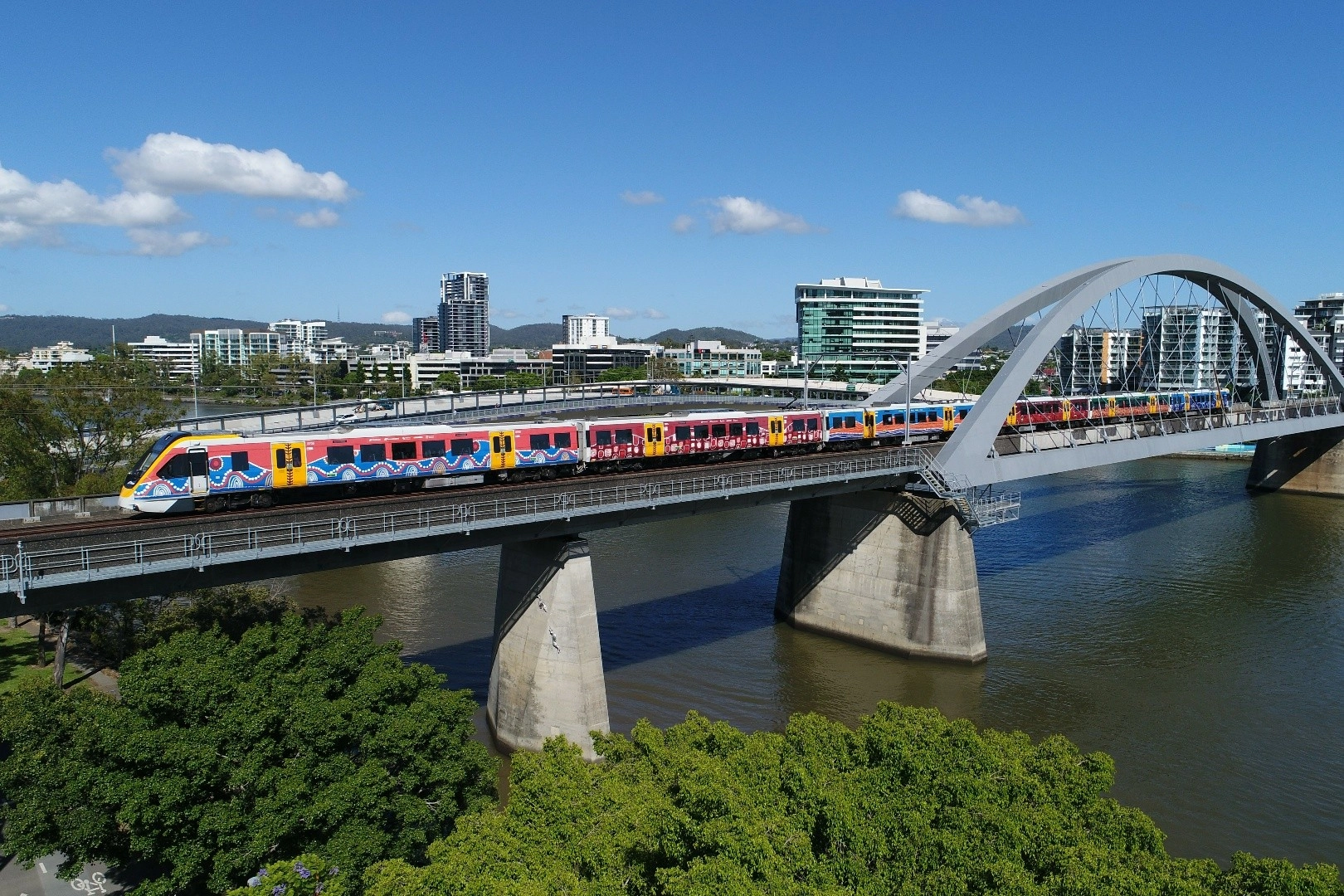
With a deep commitment to innovation, is modernizing its fleet with cutting-edge technology for sustainability and efficiency.
Its influence extends beyond transportation, contributing to regional development and improving accessibility for Queensland residents.
Culture + Values
We do better together
Treat Others With Respect – We appreciate everyone’s contributions and differences
Empower Our People – We have confidence in our people
Act Safely – We work safe, to go home safe
Make A Positive Difference – We learn from today, to improve tomorrow
Environment + Sustainability
45% Electricity Offset
Solar PV Systems Contribution
Solar PV systems at depots offset up to 45% of electricity demand, significantly reducing carbon emissions.
90% Ballast Recycled
Recycling Program Effectiveness
Up to 90% of ballast spoil is recycled, minimizing waste and contributing to sustainable resource management.
200 Cars Removed
Public Transport Impact
Each six-car train removes an equivalent of 200 cars from roads, reducing congestion and emissions.
334 t CO₂-e Saved
Annual Emission Reduction
Solar PV systems at depots save approximately 334 metric tons of carbon dioxide equivalent annually.
Integrate environmental, social and governance principles into policies, processes, strategies, risk management and decision‑making at all levels
Comply with applicable legal and other obligations
Manage material sustainability risks and opportunities to protect and enhance environment, cultural, economic and social values
Embed climate‑change risk management to progressively improve resilience of assets, infrastructure and services
Decarbonise operations in support of progress towards becoming a net zero emissions railway
Encourage innovation with new or improved technologies, processes and products that support sustainability outcomes
Monitor and report on environmental and sustainability performance to drive continual improvement
Foster a workforce culture around sustainability through training, awareness and engagement
Engage and collaborate with key stakeholders, customers, delivery partners and industry on sustainability and supply‑chain outcomes
Utilise regenerative braking on all New Generation Rollingstock to feed electricity back into the traction network
Include renewable energy in electricity contracts and install renewable generation at facilities
Recycle scrap metal, timber, paper, industrial and hazardous waste
Inclusion & Diversity
26% Female
Female representation in the workforce
Reflecting the company's efforts to increase diversity across all levels.
25% Leadership
Women in leadership positions
Highlighting the growing influence of women in senior roles within the organization.
54% Trainees
Female trainees in control roles
Demonstrating progress in diversifying new hires and fostering future leaders.
28% Industry-Wide
Female participation in the rail industry
Showcasing a broader commitment to gender diversity across the rail sector.
QR Women Collective and QR Women programs launched to increase female retention and representation
Participation in ARA Women in Mentoring, Women in Engineering, scholarships, networking events
Established Inclusion Council in early 2020 with executive-level sponsorship across gender, age, First Nations, multicultural, accessibility, LGBTIQ+, DFV prevention
Achieved White Ribbon Australia Workplace Accreditation to prevent gendered violence and sexual harassment
Industry-wide rail female participation rose from 24% to 28% (2022–23); CEOs female share up to 26% (2022–23) per ARA data