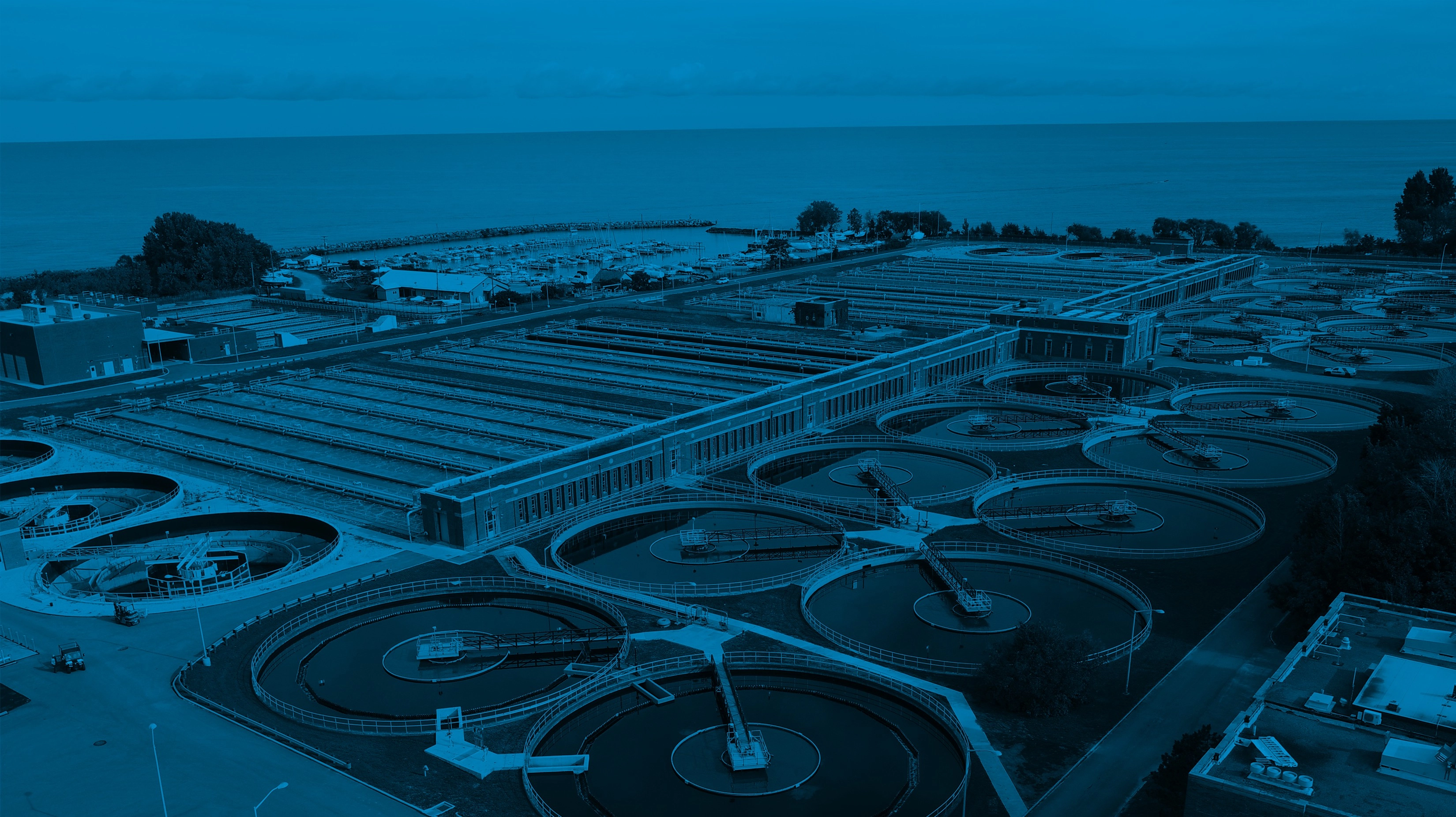
Manages wastewater treatment and stormwater systems to protect waterways in Greater Cleveland.
Manage and coordinate schedules, costs, and controls for sewer capital projects.
19 days ago ago
$62,540 - $81,854
Intermediate (4-7 years)
Full Time
Cleveland, OH
Office Full-Time
Company Size
767 Employees
Service Specialisms
Wastewater treatment
Stormwater management
Combined sewer overflow control
Industrial waste control
Interceptor sewer operation
Watershed protection and planning
Sector Specialisms
Wastewater Treatment
Interceptor Sewers
Combined Sewer Overflow Control
Industrial Waste Control
Watershed Protection
Stormwater Management
Water Quality Management
Environmental Compliance
Role
Description
schedule development
cost monitoring
wbs creation
project controls
status reporting
invoice processing
Interfaces with project, design and construction teams to define need for change to budgets and schedules, and identification of variances from the original project plan.
Implements and documents program baseline documentation: Definitions, WBS dictionary, Project Budget and baseline change requests.
Actively participates in program and project status meetings as requested.
Monitors and reviews project controls data (schedule and cost) for CIP projects.
Assists in the creation of Work Breakdown Structures (WBS) and development of baseline schedules for capital projects.
Evaluates and updates data regarding schedule dates, physical percent complete, actual cost and project accruals.
Reviews submitted baseline and progress schedules for compliance with the Sewer District’s guidelines and analyzes schedules for reasonableness compared to project scope and progress.
Prepares reports for use by Engineering and Construction Management.
Reviews submitted progress schedules for compliance with the Sewer District’s guidelines and analyzes schedules for reasonableness compared to project baseline.
Assembles and compiles schedule and cost data and input into the Project Controls Systems to ensure appropriate statuses of projects.
Analyzes schedules progress and performance and identifies developing problem areas.
Participates in project time impact analysis and provides recommendations.
Develops, maintains, and analyzes integrated critical path schedules for CIP projects in accordance with contract specifications.
Coordinates with consultants and contractors on development of schedules that meet requirements set forth in the Sewer District’s schedule specifications.
Responsible for monthly project schedule and financial updates to Capital Improvement Programs (CIP).
Incorporates submitted schedules into the master schedule database once reviewed and approved.
Gathers project progress information from project team members to update and monitor Capital Improvement Programs (CIP).
Coordinates with other project schedulers and associated Sewer District staff.
Assists in preparing status reports and other related project planning and control documentation as requested.
Works with project, program, design, construction and project controls team members to evaluate schedule status and provide recommendations to address schedule deficiencies or expedite schedules.
Monitors and processes invoices/pay applications for CIP projects.
Collaborates with internal and external stakeholders in the development of scope, schedule, budget and cost data for capital projects.
Provides training to consultant and contractor ensuring the scheduling standards and procedures are followed.
Requirements
associate degree
construction management
microsoft office
scheduling software
project controls
communication
Equivalent combination of relevant education and experience may be substituted as outlined in the Education Equivalencies Policy.
Candidate must be able to recommend corrective actions before problems arise and convey project controls and scheduling practice knowledge to others.
Candidate must be proficient in Microsoft Office Suite including Word, Excel, Access, Outlook and PowerPoint.
Candidate must possess at least an associate degree in Construction Management, Business Administration or a closely related field.
Candidate must possess the ability to interpret design and construction schedules.
Candidate must possess the ability to effectively plan, coordinate, establish and maintain effective working relationships and prioritize workloads based on available resources.
Candidate must be familiar with scheduling software including project reporting systems and capital projects.
Candidate must possess effective written and verbal communication, organizational skills and decision-making abilities.
Benefits
Information not given or found
Training + Development
Information not given or found
Interview process
Information not given or found
Visa Sponsorship
Information not given or found
Security clearance
Information not given or found
Company
Overview
1972
Year Founded
The organization was established in response to the Cuyahoga River fire crisis.
Hundreds of millions
Annual Budget
Funds critical updates to systems draining into Lake Erie and local rivers.
Oversees three major wastewater plants—Easterly, Southerly, and Westerly—and an extensive interceptor sewer network.
Projects range from massive treatment-plant upgrades to green stormwater infrastructure in suburban and urban communities.
Known for rigorous sector expertise in utilities, water resources, and infrastructure, coordinating across 60+ municipalities.
An unusual legacy: created directly in response to the infamous 1969 Cuyahoga River fire, it now safeguards the river it once rescued.
Culture + Values
Ethics, Honesty, and Transparency: Maintain the highest standards with our customers, our business partners, and each other.
Environmental stewardship: Initiate and maintain effective practices of environmental sustainability through a commitment to a better tomorrow, a healthy environment, and strong communities.
Customer Focus: Collaborate effectively with internal and external customers when considering decisions, policies, and programs.
Balanced and Informed Decision Making: Formulate quality decisions based on objective metrics, analysis of our systems, customer needs, safe practices, and organizational goals, ideas, and perspectives.
Progressive Culture: Facilitate positive changes and innovation that benefit the organization, our industry, and the region while fostering a learning environment and an engaged workforce.
Equity: Ensure that diversity, equity, and inclusion principles, policies, and practices are embedded into our work at all levels of the organization.
Accountability: Accept responsibility, account for one’s action, and deliver on individual and collective commitments.
Respect: Demonstrate high regard, value, and consideration for self, others, community, and the environment.
Environment + Sustainability
14 million dollars
Stormwater Grant Funding
The 2014–2023 Green Infrastructure Grant Program funded 84 projects capturing/treating 38.2 million gallons of stormwater annually.
1.5 million dollars
Annual Stormwater Capacity
2023 grants helped fund seven projects projected to capture almost 3 million gallons of runoff per year.
Defined sustainability principles in 2019 to guide long-term impact, covering informed decision-making, waste/energy reduction, co-benefits, resiliency planning, water quality, and erosion control.
Optimize function and resiliency of regional stormwater system by maintaining or improving water quality, mitigating flooding, and arresting stormwater-induced erosion.
Promotes conservation, efficiency, and co-benefits; considers aging infrastructure, impervious surfaces, water variability, and climate change in decision-making.
Green infrastructure strategy includes combined-sewer overflow controls, community infrastructure, watershed restoration, permit compliance and stormwater management programs.
Inclusion & Diversity
2011 Recognition
Award for Diversity Excellence
Recognized by Greater Cleveland Partnership for achievements in Board, Senior Management, Workforce, and Supplier Diversity.
2020 Equity Commitment
Advancing Diversity Programs
Recommitted to diversity, equity, and inclusion through initiatives like the Water Equity Task Force and Good Neighbor Ambassadors program.
Committed to equal opportunity by prohibiting discrimination on various protected characteristics.
Ensures equal employment opportunities in all aspects of employment, including hiring, promotions, training, and compensation.
Provides religious and disability accommodations as required by the ADA.
DEI Program aims to be an inclusive employer where all identities and experiences contribute to performance excellence.
Defines key concepts: Diversity as differences, Equity as policies removing barriers, Inclusion as leveraging differences, and Engagement as fostering purpose and impact among employees.
CEO emphasizes the importance of employee uniqueness in creating a welcoming environment.