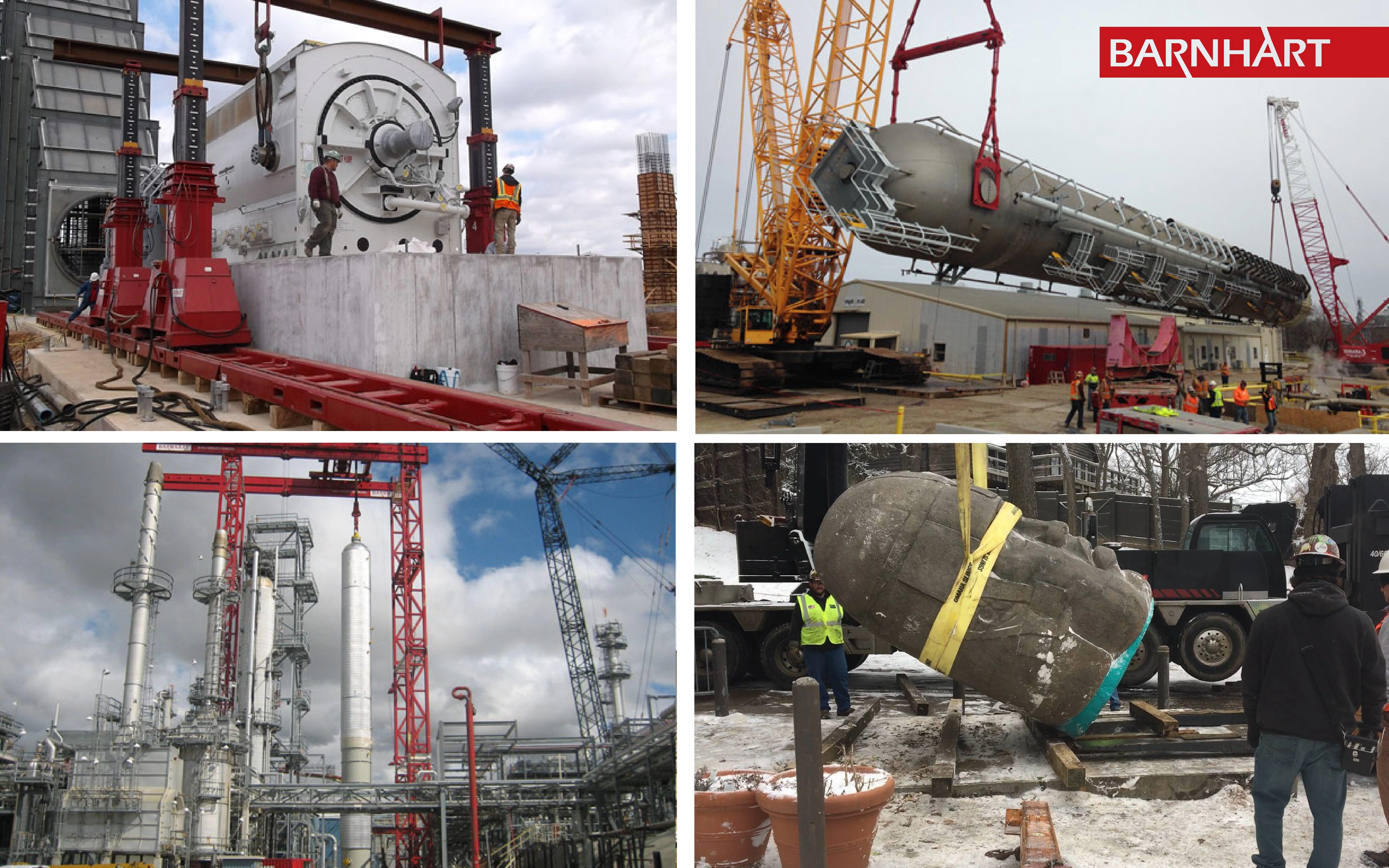

Leverage expertise in heavy lift and specialty rigging equipment to develop tailored solutions for customer needs.
Serve as technical reviewer of engineering documents including fabrication drawings, calculations, FEA reports, load test plans, electrical and hydraulic schematics, and specification sheets.
Evaluate project risks and develop mitigation strategies to address technical and operational challenges.
Concept Phase: During this phase, the team gathers key information and establishes preliminary design parameters. Early-stage CAD models, calculations, and cost estimates are developed to assess feasibility.
Prepare and maintain accurate project documentation such as qualification requirements for operating equipment, design parameters, maintenance requirements, test certificates, work instructions and standard operating procedures.
Identify and implement best practices for safety, efficiency, and innovation in crane and rigging projects.
Conduct training events to implement new equipment and teach various Engineering topics.
Keep current with industry trends, new technology, and updated regulatory requirements related to crane and rigging operations.
Serve as a field technical liaison for critical lifts, including risk management and safety evaluations for projects.
Guide junior engineers on technical matters, review their work, and support their professional development.
Production Phase: The Senior R&D Engineer works closely with the Fabrication Services Department throughout the build process, ensuring strict adherence to design specifications, quality standards, and project timelines. They oversee load testing of specialty rigging tools to verify safety and functionality. Additionally, the Senior R&D Engineer identifies and resolves design or fabrication challenges, implementing effective solutions in partnership with the fabrication team.
Manage multiple R&D projects simultaneously, tracking progress, schedules, and budgets to ensure on-time and cost-effective delivery.
Identify opportunities to optimize equipment designs to reduce costs, improve safety, and enhance overall fabrication efficiency.
Communicate project updates, technical details, and engineering solutions to clients and stakeholders to ensure alignment and satisfaction.
Drive innovation by researching and implementing emerging technologies, materials, and methodologies to improve equipment performance and efficiency.
Offer real-time technical support during critical lift operations, troubleshooting issues as they arise.
The Senior R&D Engineer leads the design and development of specialized load-handling equipment, ensuring alignment with project requirements and industry standards. The Research & Development process spans the entire project lifecycle and includes the following key phases:
Diagnose equipment issues and provide effective solutions, including guidance on repairs.
Implementation Phase: In this final phase, all supporting documents—such as detailed specification sheets, operation and maintenance manuals, and automation calculators—are completed. The Senior R&D Engineer may oversee initial field deployment, documenting lessons learned to drive continuous improvement in future designs.
Requirements
solidworks
ansys
pe license
bachelor’s degree
7+ years
project management
Project Management Skills: Strong leadership skills with experience in managing project budgets, schedules, and risks, while mentoring a team of engineers and technicians to ensure timely and cost-effective project completion.
Physical Requirements: Willingness to travel to project sites as needed. Ability to work in a variety of environments, including outdoor and construction sites, and conduct on-site inspections, which may involve standing, walking, crawling, and climbing ladders or scaffolding.
Fit for Duty: Must pass a drug test, fit for duty and background check.
Software Proficiency: Familiarity with engineering software (i.e. RISA-3D, Ansys Mechanical, Mathcad, MS Excel), as well as ERP systems, scheduling software, video conferencing platforms (WebEx, Zoom, Teams, etc.), and Microsoft Office Suite.
Technical Proficiency: Extensive expertise in mechanical design, structural analysis, and finite element analysis (FEA) for developing and evaluating custom lifting and transport equipment. Demonstrated proficiency with cranes, hoists, hydraulic systems, winches, and rigging equipment, including detailed knowledge of load charts, operational constraints, and safety standards. Skilled in advanced lifting methods such as tandem lifts, heavy load skidding, and modular transport systems. Highly proficient in CAD software (e.g., SolidWorks, AutoCAD, Inventor) for precise design and modeling. Comprehensive knowledge of stress analysis, fatigue analysis, and failure modes, ensuring structural integrity under both dynamic and static loads. Experienced in performing hand calculations and utilizing various programs (e.g., ANSYS, Nastran, Abaqus, RISA-3D) for structural and mechanical evaluations. Strong understanding of materials used in heavy equipment, including steel grades, composites, and high-strength alloys. Adept at integrating mechanical, hydraulic, and electrical systems into cohesive, functional equipment designs. Thorough knowledge of industry standards and regulations, including OSHA, AISC, AWS, ASME B30 Series, ANSI, and ASCE-7, ensuring compliance and adherence to best practices. Proven ability to plan and conduct equipment testing, including load tests, structural validation, and prototype evaluations, with expertise in documenting test results and leveraging findings to optimize designs.
Problem-Solving and Analytical Expertise: Ability to lead design reviews, troubleshoot performance issues, and implement iterative improvements. Strong analytical skills to address complex engineering challenges and devise innovative solutions. A demonstrated ability to think creatively while adhering to technical and operational constraints.
Communication: Strong verbal and written communication skills with proven ability to work in cross-functional teams, liaise with clients and stakeholders, and mentor junior engineers in technical disciplines; proficient in preparing and presenting project reports, technical documentation, and equipment operating procedures.
Bachelor’s Degree in Mechanical Engineering, Civil Engineering, or a related field from an ABET accredited 4-year university.
Experience: 7+ years of qualifying experience designing mechanical and/or structural equipment for a similar industry with a proven track record of success.
Certifications: Professional Engineer (PE) license preferred, OSHA 10
Benefits
Paid Time Off
Benefits Package including medical, dental, vision, short & long-term disability
Competitive salary
Barnhart CARES family care and community service opportunities
401K contributions matched up to 10% of pay
Bonus program that pays for performance
Training + Development
Information not given or found
Interview process
Information not given or found
Visa Sponsorship
Information not given or found
Security clearance
must pass a background check (along with drug test and fit‑for‑duty requirements).
Company
Overview
Founded with a focus on solving complex lifting and rigging challenges, Barnhart Crane & Rigging has grown into a trusted leader in heavy lifting and transportation.
From the early days, the company has been dedicated to providing creative, safe, and efficient solutions for complex industrial and energy projects.
Known for its fleet of innovative cranes and equipment, Barnhart is a key player in major construction, infrastructure, and industrial projects across the U.S.
The company specializes in industrial and energy sectors, handling projects in heavy civil, marine, transport, utilities, and more.
Barnhart's work includes some of the largest and most demanding lifting and rigging projects, ranging from wind farms and power plants to oil rigs and petrochemical facilities.
Barnhart takes pride in its ability to tailor solutions for unique challenges, providing expertise that ensures projects stay on time and within budget.
With a focus on long-term relationships, Barnhart continues to expand its footprint and services across diverse industries, making a lasting impact on infrastructure development.
Culture + Values
Safety – We invest the necessary resources to ensure safe operations.
Servant Leadership – We serve our people by providing purpose, trust, belonging, progress, recognition and compensation.
Quality Service – We develop our people and processes to ensure consistent service and operational excellence to meet the needs of our customers.
Innovation – We create better methods and tools to meet the needs of our customers.
Continuous Improvement – We evaluate every aspect of our company in order to improve.
Fairness – We are honest and fair to our people, vendors and customers.
Profit with a Purpose – We work to make profit and invest the profit to reward our teams, grow the company and meet the needs of people locally and globally.
Environment + Sustainability
No explicit net zero target or environmental strategy is disclosed on the company's website.
The Safety Manager is responsible for Environmental Programs, compliance, operational risk assessment, and environmental training.
Branches are required to manage Safety, Security, Health, and Environmental Programs and report statistics.
A continuous improvement culture involves periodic audits and enhancements in environmental engagement.
Inclusion & Diversity
No DEI information available on official site.
LinkedIn and blog show no DEI strategy or gender statistics published.
Third‑party reviews and acquisition notes mention 'commitment to diversity, equity, and inclusion' via NCSG acquisition but no specific goals or metrics provided.